For Anyone, But Not Everyone
“That’s alright, candidate! It’s not for everyone!”
I heard this offered hundreds of times during my two-ish years in the Special Forces training pipeline. This not-so-subtle encouragement to quit was always met by one of two responses from the candidate at the center of the instructor’s crosshairs: defeat or strengthened resolve. The cadre didn’t particularly care which one you chose, but they knew that you were at a place where it had to be one or the other. Do you want to be here and do this, or not?
I’m not ashamed to admit that I LOVED this aspect of the special operations life. I’ve always wanted to be part of high-performing teams, surrounded by people who were willing to fight to be there. And if you’ve ever been on such a team, you understand why it’s worth it. Sure, it’s more work and higher expectations, but I’d much rather be a little nervous showing up for PT (physical training) every morning at 6 a.m. than unsure about whether I could count on the person to my left or right. I remember being a teenager and having a friend ask me why I’d ever want to go to West Point. My answer was probably a bit self-righteous, but it was honest – I wanted to get up every morning and be forced to put my best foot forward, and I wanted to be around 4000 other young people who wanted the same thing. That kind of life wasn’t for everyone, but it was for me.
A couple of years after leaving the Army, I had the distinct privilege of leading a young nonprofit organization called Team Red, White, and Blue (Team RWB). As an early participant and fundraiser, and the organization’s first employee, I had the opportunity to help the mission grow and to achieve its aim of enriching tens of thousands of lives across hundreds of American communities. And I was immediately faced with a vexing question: how can we build a movement that is both inclusive and aspirational? I remember an early board member putting it to me this way, “How do you create something that is elite, without being elitist?” These questions were critical and timely.
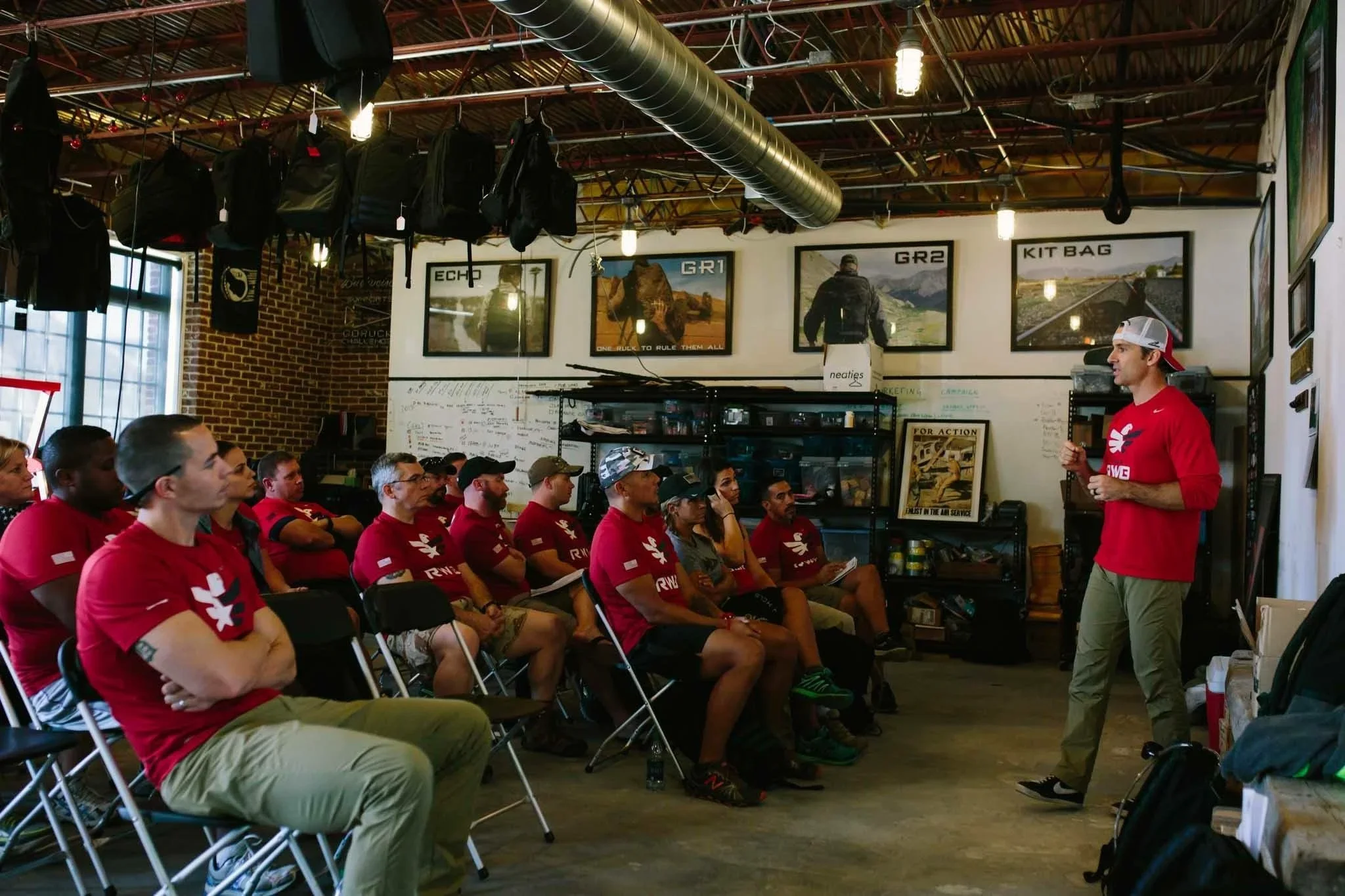
By 2012, Team RWB had spent two years raising money and awareness through impressive feats of endurance. Our founder and early supporters donned the “Eagle” (our iconic logoed t-shirts) and completed marathons, ultramarathons, and triathlons all over the country, and all over Facebook! As you might imagine, this approach was successful in attracting the kind of people who are both willing to bet on a big idea and capable of bringing it to life. Those inspirational origins laid a foundation of energy and excellence that a fledgling organization needs to catch traction and create momentum. But when we started trying to build chapters and scale the movement, they also posed a very real challenge.
“I’m not a marathoner.”
If I had a dollar for every time I heard that in my first year on the job, I could have funded Team RWB for the next five! Despite very earnest efforts to convince people otherwise, much of our outreach was met with this kind of response. People wouldn't show up to our Wednesday night running groups because they weren’t "fast enough," or "elite athletes". They saw what we had built, or more importantly, how we built it, and assumed it wasn't for them.
At first, that was frustrating. It felt like we were fighting an uphill battle just to explain who we were. We spent so much energy trying to convince people that we weren't just for ultra athletes, that anyone could join. And in that process, I realized something: though our aspirational beginning made some things harder in some ways, it absolutely made us better in the most important ways.
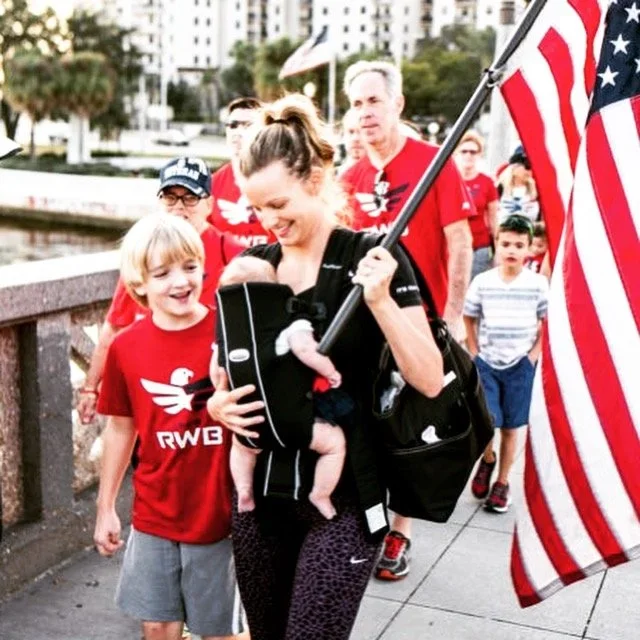
First, it helped us raise money, gain visibility, and attract some amazing people (which proved invaluable). But, as importantly, it forced us to be incredibly thoughtful about how we communicated, how we did outreach, and how we invited people to be part of something bigger than themselves. It required us to be very clear and consistent about who we were and what we stood for. And once people started to get it, once they grasped our mission and our sincerity, they felt the invitation genuinely extended to them, and something shifted.
Our members became open to challenge, trusting that we’d take care of them. They showed up because they wanted to be part of something that mattered. That ability to openly challenge them and say, "Start where you are, but strive to be a little better,” led to more serious conversations about what we could expect from one another, what standards we would uphold together, and what kind of ethos we were committing to collectively. That's when the real magic happened, and Team RWB exploded. It became an organization that was open to anyone, but wasn’t for everyone.
This seemingly paradoxical dynamic is one that I cannot unsee. I think about it all the time, and I’d like to explore a bit deeper here. We need to get our heads around this because while the most effective organizations are often the most inclusive, that doesn’t mean that they are trying to be everything to everyone. They're the ones that are crystal clear about what they stand for, unafraid to name their standards, earnest in their efforts to support people, and brave enough to hold the line. Let’s consider some other examples.
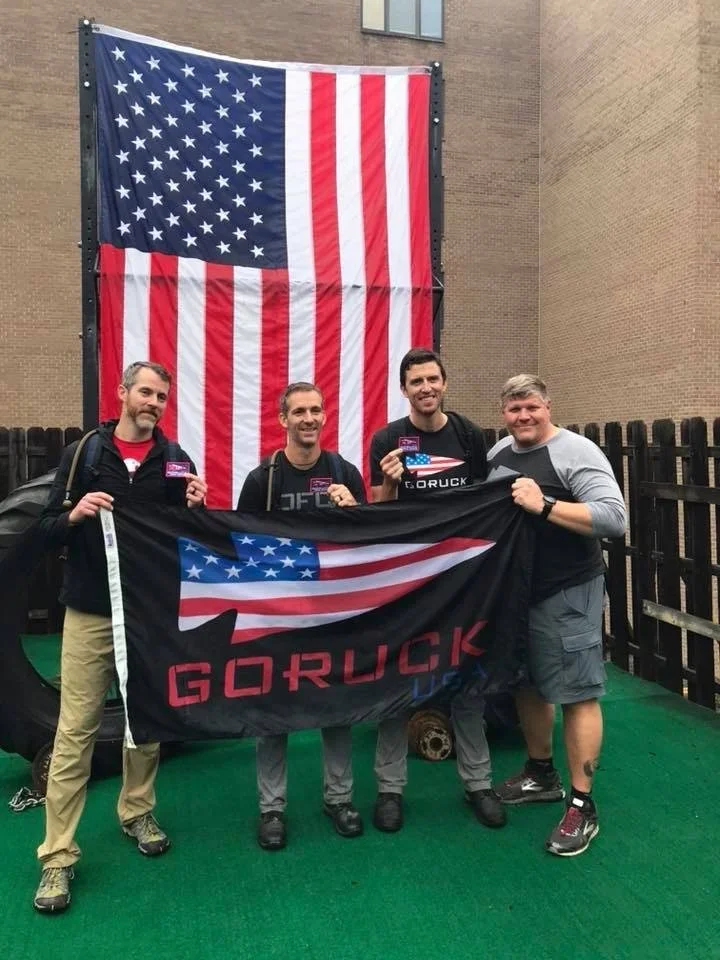
GORUCK comes to mind for me. I’ve been fortunate to be a part of this company in different capacities (customer, advisor, president, cadre), and we follow a very similar playbook. Step one is making gear that won’t ever fail and providing a lifetime guarantee to back it up. The next step is to invite people to show up as they are. Give them an accessible way to participate. Show them what right looks like. And challenge them to be better. It’s summed up nicely as “challenge excellence and do right by people”. It’s a community that was founded on the principles of the US Special Forces, and those principles remain near and dear, but that doesn’t mean you need to be a Green Beret to take part. If your first ruck is one mile with ten pounds, you’ll still get a beer and high-five at the end. You’ll probably also get goaded into doing two miles next time, and eventually signing up for a 6-hour event…because we love you. If you want to show up, work hard, and be a good teammate, GORUCK is for you. Open to anybody, but not for everybody.
Perhaps my favorite example of this is CrossFit, which offers a powerful lens on the same truth. When I discovered it in 2007, the foundational tagline was “Forging Elite Fitness”, which had an obvious appeal for guys like me. A lot of the early media showed shirtless animals lying on the floor with ripped hands. CrossFit basically dared you to give it a shot. The workouts were posted for free on CrossFit.com (still are) and invited you to post your score. It was like, “Come train CrossFit with us. Or don’t. We don’t care.” But if you had the gumption to show up, you quickly learned that the beauty of the CrossFit methodology wasn’t just the intensity, it was the scalability. CrossFit’s founder used to say that, “the needs of an Olympic athlete and your grandmother differ by degree, not type.”
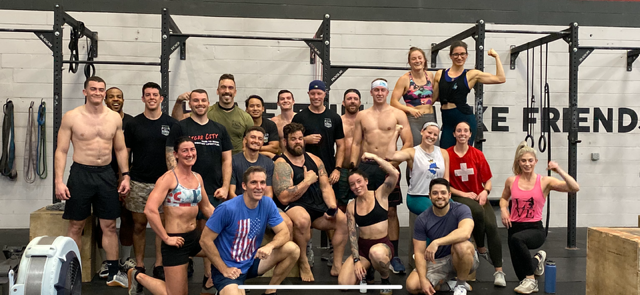
When I joined my first CrossFit gym, I was made painfully aware that while I could run pretty fast and bench press a lot, I couldn’t squat for shit, my range of motion was poor, and my technique was mostly terrible. So did they just kick me out? No! Rather, my coaches pointed to the wall that read, “Mechanics. Consistency. Intensity” and “Better Than Yesterday”. They encouraged me and helped me to develop the mobility and skill I needed to do it right, to move with virtuosity. Sometimes that meant using less weight or doing fewer reps, or modifying the movement completely. And this held true for everyone on the floor, from college athletes to soccer moms. The tribe was not being built on ability. It was built on shared effort, commitment, and support. You were expected to show up on time (or do burpees), to do it right (or get a no-rep), and to cheer for your classmates – especially those last to finish. That amazing community I found in Tampa was open to anybody, but it wasn’t for everybody.
Interestingly, CrossFit experimented with moving away from the "Forging Elite Fitness" messaging about 8 years ago, presumably to make everyone feel welcome. I imagine they were concerned that the CrossFit Games and words like “elite” were turning people away and limiting the brand's growth potential. But I believe they've come to understand that was a mistake. In recent times, that phrase has made its way back into their marketing and their merchandise. Why? Because people are not inspired by a watered-down, ordinary workout program. They won’t pay high membership fees and work their asses off to be part of something that doesn’t feel special. When you round off all the corners and sand off all the rough spots, it loses its appeal. CrossFit had meteoric growth because it gave people the chance to do things they thought they could never do, or maybe never do again. That shared experience of pushing and supporting one another toward the best version of ourselves is where the real transformation happens.
This is the same in our professional lives. There is nothing better than being part of a genuinely great organization, where you can feel the clarity and commitment of your leaders and teammates. It's the feeling of coming to work on the balls of your feet, ready to do your best work, knowing that the people around you are doing the same. It's the trust that comes from shared standards, especially high standards. Being a part of that kind of team leaves you feeling “good tired” at the end of the day, eager to rest up and get back at it…which is completely different from feeling emotionally drained and needing a stiff drink.
We share some form of this message with many of the companies that we work with at Applied Leadership Partners, and it is always met with theoretical agreement. It seems that most everybody understands the benefits of establishing clear parameters for attitude, effort, and performance, yet few are able to fully inspire and enforce those parameters. And this got us thinking about why that’s the case.
Here's what I see when we work with organizations that may have lost touch with this dynamic. They're trying so hard to be inclusive that they've become generic. They've watered down what they stand for so that everybody can be a part of the team, and in doing so have created an environment where nobody feels like they truly belong. We can’t be close to one another if we don’t share expectations and standards for how we function as a unit.
Why does this happen?
Some small businesses start too broad to begin with, perhaps because they didn't have a solid business model and thought casting a wide net was the answer. The desire for growth and the fear of being too niche can make it hard to put a stake in the ground, and easy to confuse being something to someone with being anything to anyone.
In larger organizations it's often the pressure of the immediate. When you're managing month-to-month or quarter-to-quarter realities, when there's payroll to meet and targets to hit, it's easy to lose sight of the bigger vision, and you drift. The drift often happens quietly. There's no announcement. It's a thousand small decisions, each one seeming reasonable in isolation. And then one day you look up and you don't recognize your own organization. You've become commoditized.
But I think there's something else at play too. I think some leaders are just afraid to challenge people. They worry that naming standards too clearly, that pushing people toward excellence, might cause them to bristle or push back or leave. They're afraid of coming across as too demanding. So they soften the message. They accommodate. They try to keep everyone comfortable. What they don't understand is that most people are hungry for this. Most people want a leader who sees their potential and invites them toward it. They want to be part of something that matters. They want to know what excellence looks like and be given a genuine path to get there.
The fix requires intentionality, and if we’re being totally honest, guts. You can't stumble into greatness, even if you’ve stumbled out of it. You have to choose it deliberately, and then you have to keep choosing it, probably every single day, especially as you grow. You do this by being serious about the things that matter: values, attitude, effort, and yes, performance.
The organizations that matter most are the ones that are open to anyone but are crystal clear about what they're asking people to step into. They don't apologize for their standards. They don't water them down. Instead, they make the invitation honest and real. They say, "This is what we're building. This is what we believe in. This is what excellence looks like. And if you want to be part of it, we'll help you get there."
That clarity is what makes the door truly open. The challenge is what makes people walk through it. And the support is what will keep them around.