
In the SOF community, we talk about risk before we engage in any mission. Though, on the surface, it may look like it’s all Hail Marys and goal-line heroics, the truth is that everything comes down to a calculus of risk, reward, and the ever-present force of reality.
Everything we do, from a fitness session to a combat operation, is screened through a risk assessment matrix because Soldiering is a fundamentally dangerous profession. Leaders assess the severity and probability of risk relative to the potential value of the activity. The question is simple: are we taking a calculated risk or an asymmetrical risk?
Calculated risks are when the gains outweigh the costs and potential risks.
Asymmetrical risks are when the costs and potential risks outweigh the gains.
Taking a calculated risk is boldness.
Taking an asymmetrical risk is hubris.
As Jeff Goldblum said in the 1994 classic, Jurassic Park, “Your scientists were so preoccupied with whether or not they could, that they didn't stop to think if they should.”
Tale as old as time.
In Afghanistan, from 2002–2003, our missions required us to travel the Pech River Valley Road, “IED Alley”, at the time the most dangerous road on earth due to all the roadside bomb strikes (IED, Improvised Explosive Device). Based on the risk assessment, we determined to only travel at night, under night vision, in blackout conditions. We managed the risks, which enabled us to execute our missions–calculated risk.
In doing so, we stayed on the right side of boldness.
Others did not.
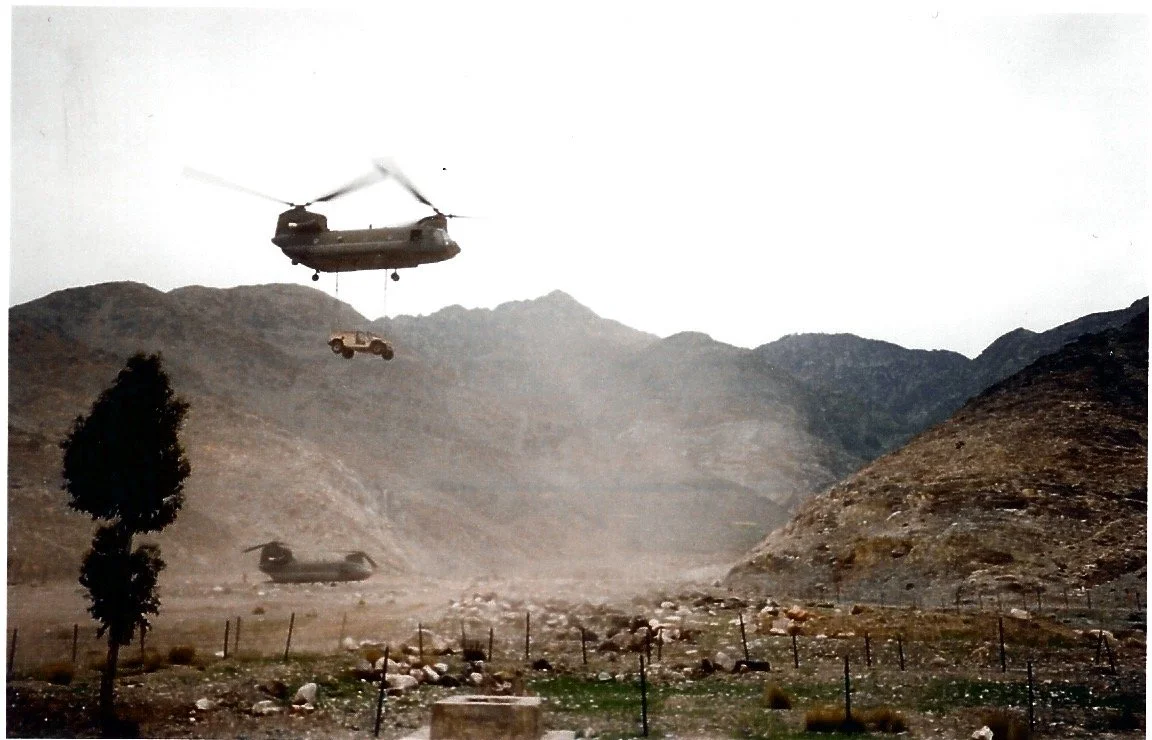
Asadabad, Afghanistan 2003; MH47 sling loads a dead Humvee (photo courtesy of Mark S.)
I would suggest, at times, their leaders were compromised by hubris and the costs of taking asymmetrical risks were permanent. On IED Alley, killed vehicles were the best-case scenario, lost Soldiers the worst, along with a number of potential consequences in between.
These things happen, “A little at a time and then all at once,” as my partner Blayne often says (a nod to Hemingway, The Sun Also Rises, 1926). Each time we take asymmetrical risks, and they work out, we get baited into believing it was calculated.
We mistake hubris for boldness.
Little by little, we take bigger and bigger risks because they work out. Until they don’t.
It’s also worth noting that we can take calculated risks with all the best mitigating practices involved and still get bitten. That is life in an uncertain world. The key for us as leaders is to control the controllables, execute with confidence, and decisively work through setbacks when reality strikes.
The calculus is the same in life and leadership. You don’t have to be running missions in a war zone to assess risks in your business. Life is inherently risky. The key is to take fewer asymmetrical risks than calculated risks and to take mitigating steps when you do. Otherwise, we never discover what's possible because we've mistaken calculated risk for recklessness.
I’m thinking about this a lot as I prepare for a canyoneering trip to Arches National Park and review route reports from people far more experienced than me. It’s fairly easy for me to allow my Ranger hubris to take point and attempt a canyon I have no business sending. But I’m older, my body doesn’t bounce back the way it used to, and I have other adventures on the horizon that require me to be upright and fit. So I’m more inclined to pull back to a few bold routes and some peaceful campfires with my Ranger Buddy.
Just that time alone is the primary objective, and being at a campsite instead of the ER because I took on asymmetrical risk in a 3A R+ rated canyon is winning the day, though the temptation is there.
And though I have a higher risk tolerance than most, I’m reminding myself that we are well to stay on the right side of boldness and steer clear of the wrong side of hubris.