

Whether you’re raising kids or leading a team, a ton of us are asking the same question right now: how do we get back to real connection without going to war with technology or wishing it was still 1988? Because while that'd be cool, the 80's are gone and technology is here to stay. All joking aside, we talk about this a lot on our team. Blayne, his wife Jeni, and my husband and I are raising two incredible little girls, and technology is already creeping into their everyday lives. We both have had some recent experiences with them that have brought happiness and a fresh perspective to our families and resonated with us in business, too.
Blayne and Jeni recently got their daughter Penny, the Tin Can Landline - a corded phone that looks like the one we grew up with. A screen-free, wi-fi landline designed for kids. No apps. No texting. No strangers getting access to your kid. A handset, a cord to twirl around your fingers while you talk (remember that?), real dial tone, and buttons. They agreed with a few other families to get these so that their girls could communicate while keeping the electronic devices at bay. What’s most important is that this experience allowed Penny to ask her parents how to call someone, how to conduct a conversation, and how to make plans with a friend. Something totally new for her, a skill that most adults take for granted, but one that is foreign to most young kids today. And though she may or may not have made some plans without asking permission, we’re all pleased to see the initiative and independence that is already developing!
The founders of Tin Can started it because they couldn’t find a phone they actually wanted to give their own kids. Too much tech, too much access, or another screen to manage. They wanted their kids to be able to call their friends, Grandma, and the neighbors, and do so safely and independently. This sentiment resonates with many parents right now. Not only for simplicity's sake and wanting to instill independence, but also to help them build the seemingly forgotten skills it imparts. It’s become so popular that they are routinely backordered.
Something similar has unfolded on my own street. My daughter Rory, and the other neighborhood kids have taken to riding their bikes up and down our dead-end street after school. Someone shows up outside on their bike, knocks on a door, and suddenly 5 kids are pedaling and shouting, pulling over to talk to neighbors driving home from work, and going into the bordering woods to adventure about. Usually, there’s one parent who pulls a lawn chair to the end of their driveway to keep an eye out, which gathers the rest of us to visit while the kids ride around.
I’m not here to stack up screen time stats or wage a war on tech, AI, or automation. The point is simple: there’s a particular kind of joy and value that lives in the friction of the analog.
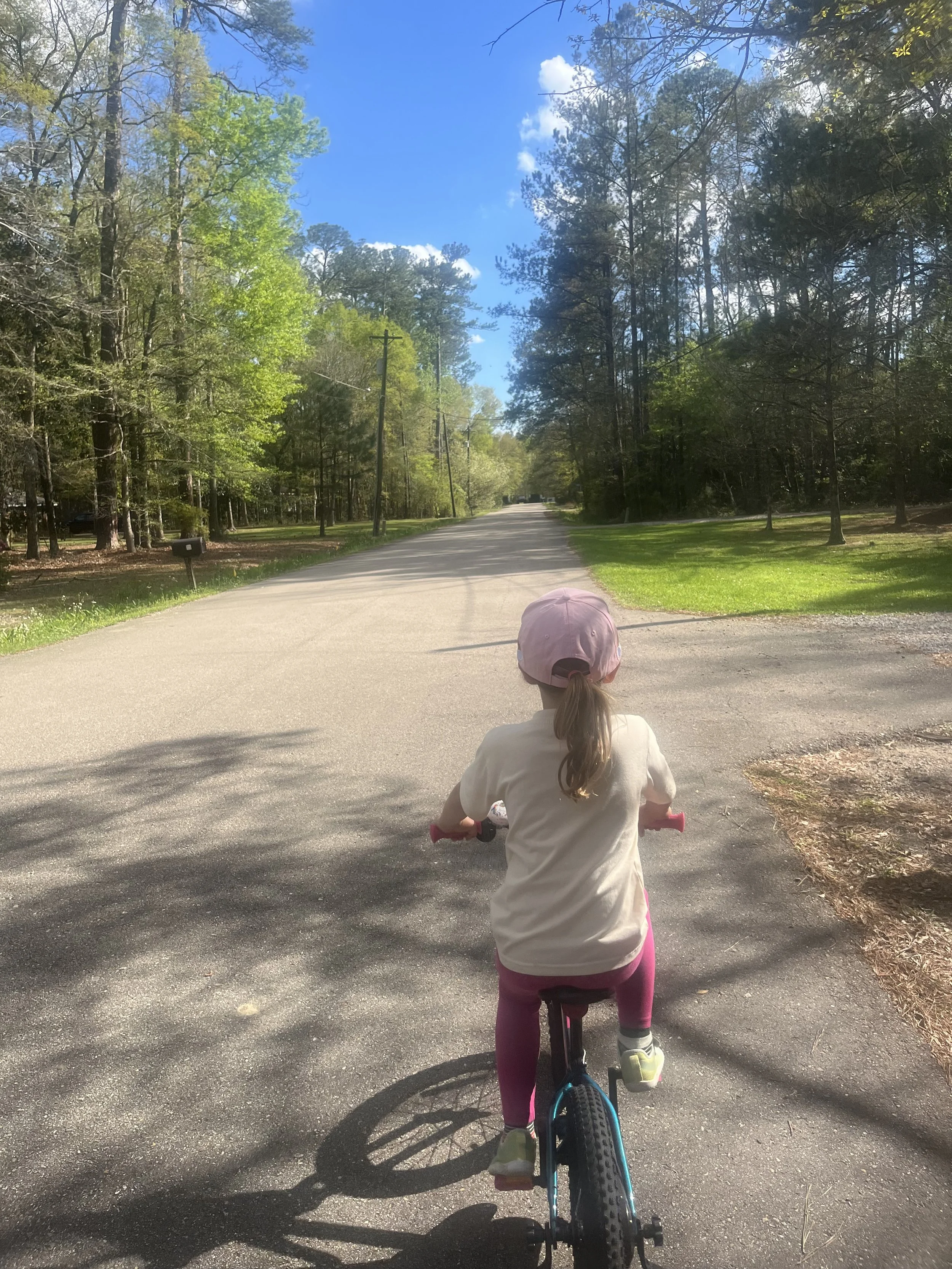
In picking up the phone, dialing the number, and actually talking to the other person on the other end. Walking away from your desk, down the hall to a colleague’s office, and chatting face-to-face instead of sending an instant message. In having to get on your bike and find a friend instead of finding “friends” online. So much can be accomplished and solved with those interactions. We know this, but in today’s world of convenience, we often forget. The neighbor showing up at your door is worth more than a hundred digital notifications.
The bikes and the landlines aren’t really about nostalgia, though I won’t pretend that’s not part of the charm and fun. It’s more about what those things quietly require of kids. Physical movement and problem-solving. Creativity born from boredom. The art of conversation etiquette, where you can’t edit, delete, or stare at a screen composing the perfect response. It builds the ability to think on your feet, to be present with another person, and to manage the discomfort of not knowing what comes next. They can experience the ordinary of showing up in someone else’s space, negotiating, and figuring it out together. Those are not small skills. Those are life skills that are built, not stumbled upon by accident.
All of the above applies to us in the adult world, too. There’s a whole generation of the workforce that lacks these simple social competencies. The best way to learn is to dive in, figure it out, side by side with others, and communicate.
We can’t hand our kids our 80’s/90s childhood back, and we probably shouldn’t. But we can carve out space for some aspects of it. Send them outside and tell them to be back at 6:00 for dinner. We can let them call Grandma on a real phone, share their day, and work through small talk. I’ve ordered a Tin Can, and so has my sister, so our kids can talk to each other. Rory can’t wait to talk to Penny, too.
My daughter came back from her road-warrior afternoon with flushed cheeks, sweaty helmet hair, and told me about some game they invented. I didn't understand the rules she was explaining. I’m sure the kids didn’t fully either. But she was amped up in a way that only being with people who are important to you produces, using your social instincts.
That’s what we’re after. A cord to twirl, a street to ride, someone on the other end who picks up our call. I guess we’re all looking for that. Humans can be messy, but humanity is certainly worth it.